
Remember when 2020 represented what the future could be? The original Bladerunner movie was set at the end of 2019 and depicted holographic advertisements, flying cars, bubble hair-dryers and AI-replicants so advanced that they were indistinguishable from humanity. Soylent Green presumed that by 2022 overpopulation, pollution and climate change would be so devastating that we would rely on euthanised people for protein…
We’re not quite there yet (although there’s still two years for the Soylent predictions!) but that doesn’t change the fact that the 2010’s were a decade of advancement that, when looked at together, was quite astonishing in how the world has suddenly changed. Smartphones have become ubiquitous, cyborg-like extensions of our personal being; our homes are starting to talk to us and monitor our every move (broadcasting back to who knows where…); and social media has become so embedded in our lives that it can be weaponised against long-standing political systems.
But it’s 2020 and we should be celebrating the fact that we made it to The Future™!
So before we look towards what is coming next, or spend more time worrying about the dehumanising trends emerging, here are some of the more hopeful advancements of the past decade that are cause for hope and celebration.
AI Medical Diagnosis
Early diagnosis is essential to overcoming many otherwise terminal illnesses and unfortunately doctors are fallible human beings. This is where a well-developed, but non-sentient, artificial intelligence can really shine – and we’re already seeing fantastic results. Recent studies have shown that AI is now at least as accurate with diagnosis as the best experts, particularly when medical image scans are involved. When combined with doctor consultation, the partnership between AI and medical practitioners can free up resources while ensuring a more consistent approach to diagnosis that can help provide the early care needed to drastically increase survival rates.
Diagnosis isn’t the only area that AI is facilitating medical improvements; it is leading new methods of drug creation, patient monitoring, and overcoming disability. The ability to parse through millions of words of published material allows for ‘targeted navigation of the knowledge landscape’ to highlight connections between studies that otherwise might take years to review. AI is also proving highly adept at helping filter out which social determinants of health are most relevant in different circumstances.
There is, of course, deep-seated institutional structures to shift before AI will find itself widely used – as well as consumer suspicion that they aren’t getting personalised care – but the positive results of a medical system that works closely with specialised AI, customised to different areas of medical science and patient care, will be truly revolutionary and has already begun.
Quantum Computing
Once properly developed, there’s perhaps nothing more impacting to human evolution than quantum computing. This is because it will exponentially increase advancements in other research areas and our ability to model (and co-ordinate) complex systems.
For decades, quantum computing has been theoretical and based around the concept that entanglement states could be used in communications technology. However, in the last few years it has suddenly emerged as a feasible, working technology soon to break free of research papers and secret projects to become commercially available in circuit-based form.
The real impact of quantum computing is yet to be seen, but the concept has now been proven and shown to work; capable of completing operations that would take other computers millennia, which is an achievement truly worthy of the future. If the singularity occurs as envisaged, we can be pretty sure it’s going to be built on foundations of quantum computing. The fact that they are working and available today shows that the future really does begin now.
Autonomous Vehicles
Autonomous vehicles are one of those advancements that feels simple on the surface, but once you start to think about how they will reshape society and the cities we live in you realise it is a truly disruptive technology.
A long-standing trope of science fiction and early depictions of the future (although perhaps flying cars, ala Bladerunner and Fifth Element, get even more traction) self-driving vehicles are an exciting technology that will fundamentally change the way we conceive of our cities and transportation networks. Once used widely, they will reduce unnecessary vehicular deaths by tens of thousands a year (even at a conservative estimate); create efficient supply chains that don’t rely on exploiting drivers; and help us to reduce pollution and create sustainable transportation. These are all significant, tangible and immediately positive results worth celebrating and ready for mainstream adoption.
The challenge for the next decade will be the transition period in which we have a significant number of autonomous vehicles sharing the road with full-control drivers, who could drive more aggressively against AI vehicles they know will stop for them.
There are also concerns about ownership and how such systems will plug into the ever-encompassing surveillance paradigms of the modern era – not to mention the terrifying world of automated weaponry. But when utilised correctly and with the wellbeing of individual users in mind, self-driving cars are a game-changing advancement that will positively affect our day-to-day lives.
Renewable Energy
It has been a long journey, but in 2019 it became clear that a tipping point had been reached and renewable energy sources were now cheaper than fossil fuels in most cases. This important landmark, meaning that there is no longer a commercial argument to the use of highly polluting energy sources, came off the back of huge strides in renewable energy production, efficiency and storage.
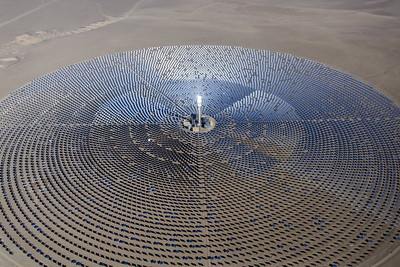
The flourishing of global society in the 21st century will depend upon the widespread and near-complete adoption of renewable energy sources, not only because they will allow us to draw back from the worst-case scenarios of climate change; but also because they are capable of creating local microgrid networks that provide resilience to communities who might be cut off from power due to natural disaster, commercial failures or political control.
Of course, there’s a long way to go and for every story of sustainable microgrid communities there are also ones like Google and Microsoft gearing up AI to help escalate fossil fuel exploration and extraction. However, it will be through a combination of different renewable energy sectors that will enable the strangle-hold of fossil fuels to finally be released.
Innovation needs to be backed by continuous pressure at a political level to undermine the vast amounts of funding by fossil fuel industry lobbyists and their surrogates. Thankfully, the economic arguments they’ve been relying on for so long have been toppled; which means that market forces can join with our moral obligation and survival needs to create a new and fully renewable energy future.
Longevity Research
Many people come to futurist thinking from reading those who seek to extend the human lifespan into centuries and perhaps beyond. It’s a fascinating prospect: what would you do if you had twice or three times as much time in your life? Extending the one resource that we can’t readily produce more of seems like the pinnacle of human progress.
Improving human longevity is no longer a question of if it is possible, but now a question of when the general public will begin to see their own lifespans increase. It’s debatable how much of an impact those of us living as adults today will see – mostly through genome sequencing and medical advancements that combat early death from illness and diseases such as cancer – but for the next generation/s there will be a substantial extension of their lifespans that will change the inherent fabric of society.
Efforts such as the Academy for Health and Lifespan Research are bringing together a consortium of scientists from the likes of Harvard and MIT, with huge amounts of funding available to move research forward.
Virtual Reality
VR has been around for a long time, but it was always a technology that never quite lived up to expectations. Until now, that is, as the past few years have shown that VR is impressive, immersive and here to stay.

For the most part VR is being led by the gaming industry, which is no bad thing as story-telling can be both emotionally engaging and exhilarating, but it’s also seeing increasing use in the medical training and therapeutic communities; alongside industries such as architecture and design, where it has a natural use case. Augmented Reality (AR) is also making significant headway and the two approaches are increasingly working in parallel.
In the past year VR has hit its stride and is now ready for prime time, with the release of the next Half Life game being a pivotal moment that will see VR burst into the mainstream in 2020. As always, we’ve got to fight back against the likes of Facebook wanting to control our virtual worlds as much as they do our social lives; but there are newer and better options to the Oculus now available and the technology is becoming more diverse and better democratised in its usage. Virtual Reality is officially here to stay and it’s going to be an absolute blast – and an educational one at that!
Distributed Blockchains
Although technically belonging to the end of the previous decade, it’s undeniable that the 2010’s were the scene for Bitcoin and blockchain technology to emerge as true contenders to the creation of a new monetary system. Say what you want about its long term viability and whether there’s a feasible path to mainstream adoption, huge strides have been made and the fact that we can even consider a decentralised, uncensorable global currency that can simultaneously carry data within it is truly revolutionary.
That’s before we even begin to look at the other use cases and protocols out there, which enable the democratisation of many sectors previously held by deeply entrenched vested interests. From real estate to distributed smartphone applications, fraud resistant voting to cross-border payments; blockchain technology and the cryptocurrencies built on it are a paradigm shifting change to many of the core systems that modern society relies upon.
As long as we can get over the spate of scams, fraudsters and the difficulty of ‘becoming your own bank’ that proves a high barrier for entry then the future of blockchain is bright. It’s early days and so much more is yet to come, with some basic usability hurdles to be overcome in the next few years. Bitcoin processed $673 Billion of on-chain transactions in 2019, so watch the halving around June 2020 for indicators of what the next leg in this journey might look like.
Conclusion
There are so many advancements being announced these days that it’s hard to keep up. The above are just some areas that I feel provide a more hopeful view of what the future could be; one that is more egalitarian, fair and focused on human wellbeing than perhaps the last fifty years of capitalism have been providing for global society.
In among all of the concerning advancements in areas such as surveillance, data profiling, military capabilities, bio-engineering and the steady erosion of civil liberties, there are also huge strides being made in areas that can provide a brighter future.
The strapline of this blog has always been ‘What do we want to be?’ for this exact reason. Unless we participate in the formation of new technologies and the regulations that surround them then we are handing over our agency to actors – individual, corporate and government – that won’t always have our collective best interests to heart.
The future is now. It’s time to start playing our part in directing its course.
Header Image by tdlucas5000, Flickr, Creative Commons
 There are many names in the world of futurist thought past and present, but one that is often overlooked despite his influential impact is the High Priest of the psychedelic movement: