Well, we’re back from our Christmas holiday – hope everybody had some time off to enjoy! Now, it’s time to get back into the swing of things and start bringing you some more interesting topics and news to think about as we move into the second decade of the 21st century. This century is almost certainly going to be one of the most fast-paced and progressive (whatever that may mean exactly) centuries throughout the entirety of human history, which can make it equally a very exciting or a very terrifying time to be around depending on how you look at things.
To mark the end of 2009 and the beginning of the new upcoming decade, I wanted to bring you a series of posts that will look at the sectors of knowledge, technology and human progress that are going to see some astounding changes throughout the next few years. These sectors will be at the forefront of what will be seen as progress, and will more than likely change our lives so drastically in the more distant future beyond the next decade that we will have difficulty reconciling the new existence with the one that we are currently living within.
Of course, such rapid change is not always necessarily for the best – which is something that we like to keep spotlighting here at Future Conscience – but for better or for worse the change is coming. The first, and often most important step, is to raise our awareness of where such future paths will emerge from and keep ourselves informed so that we can head into the future with our eyes open and our minds aware.
So, with all that being said, the next five posts from me will be examining 10 different sectors that I feel are worth keeping up to date with over the next decade. We’ll be looking at two different sectors for each post, and I definitely want to encourage you to comment on these posts with any useful links or news that you may have come across.
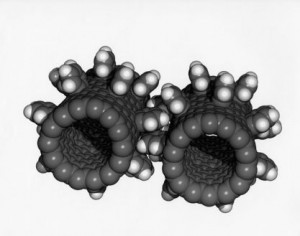
Simulation image of nanogears as produced by NASA
1. Nanotechnology – let’s get this one out of the way early. For those of you who have been reading this site from our early days about four months ago, you’ll be well aware that I like to keep bringing attention to the many different advancements and uses of nanotechnology. From theoretical capabilities surrounding immortality, to the very real and already implemented uses within commercial products and food sources, nanotechnology represents a sector that will certainly have an impact in almost every aspect of our day-to-day lives. Beyond the upcoming decade, it is quite possible that nanotechnology will lead to the type of machinery that we can only dream of right now – the kind that can manufacture any substance or object that we wish by creating it on a molecular basis on the spot.
Such an advancement, however, is beyond the scope of what we can expect over the next ten years. But what we can expect is for the many different types of nanotechnology to become common place within almost every area of manufacturing and invention. Because of this, it is a sector that will play a very large role in many advancements in other sectors that I will be highlighting over the course of this series of posts – so it’s worth keeping in mind the true impact that nanotechnology is going to have over the upcoming decade.
Beyond the arguably gimmicky advancements of food packaging that tells you when its contents are off, or making any surface waterproof (such as paper), there are some truly revolutionary advancements just around the corner; particularly in the area of medicine. We’ll be looking at some more specifics in later entries in this series, but one of the most promising ones that has been discussed recently sees nanotechnology used to detect diseases and abnormalities such as cancer far more quickly and accurately than has previously been possible.
Nanotechnology may eventually lead to us completely overcoming such concerns, but during the next decade we can still expect to see huge advancements being made on a very real and practical level. Many of these will make our lives more convenient or accessible, and it is quite likely that most of them will be tied to manufacturing processes that create higher profit margins or new commercial opportunities. But will also be other uses and avenues developed that will help us begin to overcome some of the largest pressures facing the human condition today – such as medical health and longevity – and we will certainly be seeing some real progress down this path over the next ten years that will help us get a much clearer picture of just how soon we can realistically begin to expect such monumental changes to occur.
[ad name=”Google Adsense-Link Banner x4″]
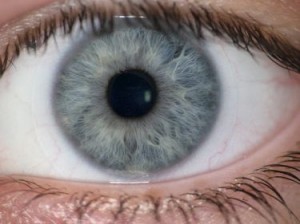
Iris recognition is one of many biometric identifiers used
2. Biometrics – Biometrics is one of those sectors that is going to see an increasingly close degree of scrutiny placed upon it over the next decade, and rightly so. It is an area that contains some great possibilities, but equally so has some worrying ethical issues running right alongside the possible benefits. When spoken about in a very general sense, the use of biometrics allows for individuals to be categorised depending upon individual traits. These traits can be both physiological or behavioural, and we have already seen biometrics being used to an increasing degree and particularly so when it comes to issues surrounding security and identity recognition (DNA/fingerprint databases, and ID cards respectively).
One of the most likely implementations of biometric technology on a wide-scale will be in the use of facial recognition technology, particularly at airports and other sites that are deemed to require higher security. For those of you living within the UK, the increasing CCTV coverage will certainly be combined with the ability to track known criminals movements – an act that when used correctly and in moderation might very well lead to a safer and more peaceful society. However, we can all think of at least a dozen or so situations where such capabilities will not be used correctly; and it is here where the real concerns should be raised and debated in a very public and open forum rather than just being implemented without any significant public input.
Even when we overlook some of the very real concerns that surround an abuse of authority by governments and their respective agencies, there is still a concern about the privacy of the data being collected. Given the many recent examples of government incompetence when it comes to such privacy issues (those of you who live in the UK in particular will be well aware of such instances), the collection of vasts amounts of biometric data should certainly be raising some eyebrows.
Taking a step back from all the doom and gloom conspiracy talk however, there are other uses of biometric technology which we will see on a more practical and personal level. Personal security capabilities such as biometric access to laptops, wallets and even cars are already seeing implementation and will continue to be refined and improved. In relation to automotive technology, there has recently been an announcement about a collaboration between Ford and MIT that will be examining ways to utilise the biometric data of a driver and feeding it into dynamic systems within the vehicle itself in an attempt to reduce stressful situations and improve automobile safety.
Other personal uses of biometrics will begin to see real implementations and, given that even Nintendo looks like it is about to include such technology into its console capabilities, it isn’t going to be too long before we will see our own households begin to dynamically alter around our current physiological and behavioural traits. Although such real-time implementations such as dynamic environments might be a bit further away than the upcoming decade, the basis of a biometric society both public and private will certainly be solidified in the near future.
End of Part One
[ad name=”Google Adsense-Medium Square”]
So that brings us to the end of part one, come back soon for a look at two other sectors that will certainly be worth keeping an eye on. As always, if you’ve got any opinions or sources of information on the two sectors highlighted today please do leave a comment.
Continue to Part Two…