Tag Archives: biomedical

10 sectors to watch over the next decade (part 3)

<<< Part Two: Environmentalism & Neural Interfacing

If you haven’t already read over the past two entries in the series, do use the links above to go through what has previously been discussed.  Now that we’re onto part three, I wanted to bring up two more sectors that we’ve focused quite a lot on here at Future Conscience: genetics and artificial intelligence.

They are sectors that the first decade of the 21st century really proved the validity of, and solidified both of them as central to our collective vision of future society.  Even if you aren’t at all interested in scientific progress or future technology, if you’ve got a television or an internet connection you’ve already heard a lot about these two fields…
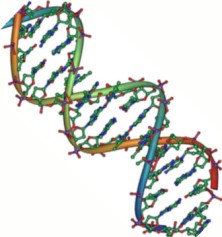
DNA Double Helix

5. Genetics – The first decade of this century began with a very clear goal when it came to the development of genetics: sequence the human genome.  Within the first two years, we had done just that (well, for the most part) and the realms of possibility that such an achievement brought have only just begun to be understood almost ten years later.

First and foremost, are the huge benefits that the field of genetics can bring in the areas of disease diagnosis, monitoring and treatment.  Understanding the genetic components, where present, in many different diseases leads directly to more effective treatments and drugs that are more acutely focused and therefore often have far fewer side effects.  Not only this, but the field of genetics is incredibly useful when used to examine things such as the DNA of germs and viruses – leading to the discovery of new ways to deal with their rapid genetic mutation, particularly in environments such as hospitals.

On an individual level, what we are going to see within the next decade is the ability to afford to have our own DNA sequence mapped out.  There are already a number of different commercial enterprises that are fighting to be the first to get such a procedure under the US$1,000 mark, and it is a milestone that we can be assured will be met before this decade is completed.

An understanding of your personal DNA sequence of course leads to knowledge of disease susceptibility, which in turn can lead to pre-emptive intervention strategies.  On a personal level, this is quite exciting news when you first think of the positive implications for life-expectancy.  However, there are some worrying hurdles that will need to be overcome with the advent of such technology.

The first one will come from the psychological impact of knowing that you are genetically predisposed to fatal illnesses, the foreknowledge of such might (nay, will) lead to cases of depression and other forms of emotional turmoil that are difficult to predict before you are overcome by them.  Further to this personal impact, there are the vast ethical implications of how wider society will interact with knowledge of your personal genetic weaknesses (and, to a lesser extent, strengths).

Between the incredible advancements in medicine, biology and longevity, and the incredibly complicated ethical questions that will need to be discussed and dealt with, the field of genetics is definitely one to watch over the coming decade.

[ad name=”Google Adsense-Link Banner x4″]

Cyber Gang (image by WebWizzard, Flickr, CC)

6. Artificial Intelligence – There are some people out there who will tell you that, as an entire species, humanity might be on the verge of becoming obsolete.  The reason why?  Because once we develop an artificial intelligence that is truly sentient and capable of self-replication it will evolve and reproduce at such an exponential rate that we will never be able to keep up with it.

For those of you who haven’t come across this idea before (at least, not outside of the confines of a science fiction movie or novel), it is a subset of a theory known as The Singularity.  At such a point, we either merge human technology with human intelligence or we fall to the wayside and lose our dominant position entirely.

Whilst the theories that lead to such conclusions are certainly eye-opening, and in many ways quite convincing from a logical perspective, the field of artificial intelligence does not have to be overcome by the doomsday scenarios that it tends to attract.

Artificial Intelligence, as a field of study, is now about 60 years old if we presume that Alan Turing marks the beginning of it as a true sector of human endeavour.  From the humble beginnings of teaching a computer to play checkers in 1952, IBM has consistently been at the forefront of artificial intelligence research and today is still leading the way with its Blue Brain project that is progressing quickly towards its goal of creating a supercomputer capable of perfectly simulating the human brain.

The research possibilities alone are staggering, and it is in this area that we are most likely to see progress over the next decade.  Practically speaking, one of the Holy Grails of artificial intelligence research revolves around what initially seems to be a rather mundane tool: the search engine.  When you consider the increasing amounts of information becoming available to us through the internet, the ability to quickly and accurately locate needed information will become central to our ability to utilise this vast repository of knowledge.  With increased artificial intelligence capabilities, the search engine will be able to ‘understand’ the requests you are putting before it and work with you dynamically to ensure that you find exactly what you need.

Automation of transportation systems; administration and project management; the manufacturing process; and even many forms of scientific research will be made increasingly feasible with the advent of improved artificial intelligence.  What this means for society as a whole is yet to be seen, and, even when we just consider the implications of higher unemployment rates because of such automation, it is clear that new paradigms will need to emerge.  Love it or fear it, artificial intelligence is truly on the cusp of a major breakthrough – and one that is likely to occur within the next three to five years.

End of Part Three

So there you have it, talk of sentient robots deciding us puny humans are an irrelevancy marks the end of part three of our ’10 sectors to watch…’ series.  I didn’t really want it to come across that way, and I hope that you will look past the many possible End Times scenarios that rapid progress can conjure up.  One thing is for certain, the next decade is going to be a truly revolutionary one – the kind where we must come together to collectively form new social paradigms and modes of identity creation.

[ad name=”Google Adsense-Medium Square”]

Join us next time as we continue to look at two more sectors that are likely to change the world as we know it over the next decade.  As always, if you have any comments or thoughts you would like to share in relation to the topics of genetics or artificial intelligence discussed in this post please do leave a comment – we’d love to hear from you!


Continue to Part Four >>>

10 sectors to watch over the next decade (part 2)

With our  ’10 sectors to watch over the next decade’ series, we’re taking a brief look at a number of areas that are well worth keeping an eye on and making sure you are informed about any news or events surrounding them.  Yesterday, I highlighted nanotechnology and biometrics, so if you haven’t read that yet do go back and check it out before continuing with our next two sectors below.

Green Leaf (Image by miyukiutada, Flickr, CC)

3. Environmentalism – The recent political ruckus that was the Copenhagen Summit has sent a very strong message: in the next decade the chances of seeing drastic, co-ordinated global change to minimise how we damage our planet’s environment is looking pretty unlikely.

When it comes to focused efforts on the reduction of carbon consumption, it does seem like this avenue might become a dead-end; or at most come far too late.  Others disagree with this idea, saying that the summit represented a global recognition of the seriousness of the problems at hand and the need to overcome them within a relatively short time frame.

Over the next ten years the impact of global climate change – regardless of its cause – will become more apparent.  Beyond the political and economic solutions that are being attempted at the moment, I think what we will see occurring is a shift towards scientific innovations that allow such changes to be made without as much perceived sacrifice.

Clean and renewable forms of energy are just one such avenue that we will definitely see vast amounts of research being presented upon – for it is, after-all, an economic Holy Grail – I would also expect to see more focus begin to be placed upon what we can do when climate change occurs, rather than most discussion focusing on how we can stop climate change from occurring.  We might even begin to see some progress towards scientific solutions that allow us to directly reverse the damaging impact that we have, and will continue to have, upon our environment.

This will prove to be a field that requires a great deal of expertise from all walks of life.  Coping with the changing environment that we exist within may well prove to be the biggest challenge of the 21st century, and that’s stating it lightly by overlooking some of the more doomsday type scenarios.  Although the next decade will probably still be one of public denial, what we should be looking out for – and, indeed, encouraging – is a greater awareness of post-environmental disaster scenarios and planning.

Practically speaking, we can almost certainly expect forms of carbon/pollution tax to have a noticeable impact on personal and corporate finances.  There will also hopefully be more of a push towards increasing local food production and sourcing, an aspect of modern society that in some parts of the world is now dangerously unavailable to any significant degree.  Transportation networks will see drastic overhauls in one direction or another; the benefits of high-speed rail networks over domestic flights already being touted in places such as the United Kingdom.

[ad name=”Google Adsense-Link Banner x4″]

Electric Neurons (image by philosophy_rebel, Flickr, CC)

4. Neural Interfacing – In the past few years we have seen some remarkable progress being made in the realm of brain-computer interface systems; literally the ability to control a manufactured object with nothing but thought.  The wide-range of applications for such a capability is truly only limited by our collective imagination (which is to say, not really limited at all), and in the last few years we have just begun to see highly successful examples of this technology emerging into the public sphere.

The most common areas of research in regards to neural interfacing surround the development of prosthetics to overcome disabilities.  A high profile example of this was seen last year when it was announced that a group of Italian scientists had run successful tests of a neural-interface hand prosthetic, a device which not only allowed for examples of fine motor control but also allowed feedback of tactile sensation to the user.  It doesn’t take much to imagine the revolutionary medical advancements that could be made to overcome disabilities of all kinds through the use of such neural interfaces.  Spinal damage leading to paralysis could be overcome; the blind and deaf could have their senses restored; even illnesses such as depression could be overcome with such technology.

Of course, the benefits of such systems can extend beyond the realms of medicine.  In a trivial sense, this year saw the release of a number of children’s toys that used basic electrodes to monitor brain states and manipulate an object to a simple degree.  What we will see over the next decade is this idea begin to be extended towards its logical conclusion.

Consumer implementations of this technology will be completely non-invasive and probably surround forms of entertainment or mental training.  However, take the idea a few steps further and you begin to see possibilities of information transfer and retention that far supersede our current global information networks.  Such implementations will of course not be available within the next ten years, but we will almost certainly have a large amount of research being done that will help see the true realms of possibility when it comes to such technology.

For example, it is known that the US government has invested money into programmes seeking to develop forms of neural-interface telepathy.  These devices will theoretically work by interpreting an individual’s brain signals that have been mapped previously to particular words, allowing these signals to be transmitted over long-distance and converted into auditory signals.  Eventually, the idea would be to allow two individuals using the technology to communicate telepathically for all intents and purposes.

I’ll just let that last idea sink in a little bit longer.  Neural-interface technologies will quite likely lead to telepathic communication capabilities.  Excited yet?  Now consider the ethical implications.  Could such technology eventually lead to a more generalised capability to read people’s thoughts against their will?  Possibilities of telepathy and the ethical questions that surround it is what makes neural-interface technology both truly exciting and absolutely terrifying.

Of course, this also means that it is without a doubt one of the most important sectors to keep an eye on in the upcoming decade.  When you add the massive medical progress that is likely to see fruition, and this is where most advancements in the next ten years will be reported, you can hopefully see why you should keep the term ‘neural-interface’ at the forefront of your future conscience.

End of Part Two

So concludes part two of the series.  With two more sectors to now begin to explore, I hope that you are beginning to become more excited about the prospects that are hovering just over the horizon.  Along with this feeling of excitement, however, I hope that you are also beginning to see the massive ethical issues that they will bring along right behind.

[ad name=”Google Adsense-Medium Square”]

A common element of contention amongst all of the sectors that will be discussed is the effect that the economic gap between rich and poor will have.  Will only those in positions of financial and political influence have access to these new sectors, thereby giving them a massive advantage when it comes to the benefits that these sectors will bring with them?  It’s certainly a question worth keeping in mind…

As always, any comments or thoughts you may have would be much appreciated – if you’re reading, let us know you are there!

7 ways to live longer so that you might live forever

There has been a lot of discussion amongst the futurist crowd recently about projections for longevity advancements over the next 50 years. So what are some ways that you can live longer in order to be able to benefit from these advancements?Continue Reading

Friday Link Roundup: Stem Cell Research

This week’s selection of links touch on several aspects of stem cell research. These topics range from the controversy and ethics of stem cell treatment, to new advances in genetic research as well as current uses in society today.Continue Reading